GST Injustice on Restaurant and Bar Trade? 5% Tax Levied but No Input Tax Credit on Purchases
Restaurant and bar operators are denied Input Tax Credit despite paying 5% GST on sales, creating a dual tax burden that industry bodies have repeatedly flagged to the Finance Ministry and GST Council.
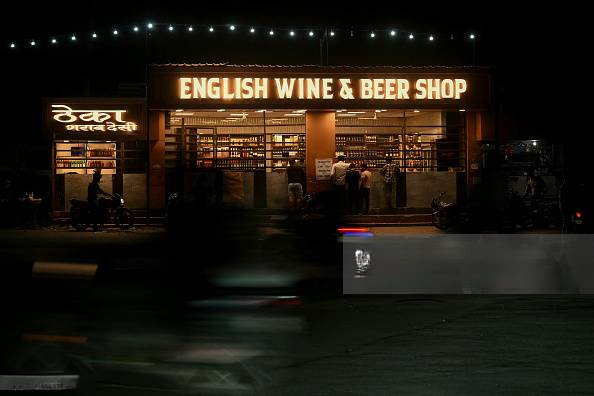
Mumbai: The policy framework governing the 5% Goods and Services Tax (GST) applicable to restaurant and bar-and-restaurant businesses across India has once again come under scrutiny. Despite collecting 5% GST from customers, operators are denied Input Tax Credit (ITC) on purchases made for running their businesses — a structural anomaly that industry stakeholders say imposes a dual tax burden on an already stressed sector.
What makes this particularly contentious is that certain other businesses operating under the same 5% GST rate are able to avail ITC benefits under their respective tax structures. This has prompted the restaurant and bar industry to ask: why should the same tax rate come with different rules for different businesses?
When the central government introduced GST, the stated objectives included simplifying the tax system, eliminating the cascading effect of tax-on-tax, and bringing greater transparency to business operations. However, the denial of ITC alongside the 5% GST on restaurant services is seen by operators as running counter to these very goals.
GST on Purchases Absorbed as Cost — Profits Take the Hit: Running a restaurant or bar-and-restaurant establishment requires significant expenditure on food and beverages, furniture, air-conditioning systems, refrigeration equipment, cooking appliances, electricity, repairs, maintenance, and a range of other services. GST is levied at varying rates on all of these inputs.
Since the GST collected from customers cannot be offset against the GST paid on these purchases, the input tax becomes a direct cost to the business. This reduces profit margins and adds financial pressure to an already challenging operating environment — particularly given rising rents, wages, electricity tariffs, food costs, licence fees, and other overheads.
Same 5% GST Rate, Different Rules — Why? Input Tax Credit is a foundational concept in the GST framework. Eligible businesses can use the GST paid on purchases to reduce their output tax liability. However, certain supplies at lower tax rates come with a specific restriction on ITC claims. The restaurant industry's question is straightforward: when the same tax rate applies, why should the availability of tax relief differ based on the nature of the business?
Industry Bodies Have Raised This Before: The ITC issue in the restaurant sector is not new. Major national industry associations have previously raised this concern with the central government and the Finance Ministry.
National Restaurant Association of India (NRAI): In June 2019, NRAI wrote to the central government requesting a dual GST structure — allowing restaurants to either continue with 5% GST without ITC, or opt for a higher rate with ITC. The association noted that the denial of ITC was severely impacting the industry and had contributed to widespread restaurant closures. Given that GST rates for several industries and services have since been reduced to 5% from September 2025, the earlier NRAI proposal needs to be revisited — the reference to a 12% rate with ITC should now be updated to reflect a 5% GST rate with ITC.
Federation of Hotel and Restaurant Associations of India (FHRAI): In September 2025, against the backdrop of GST rate revisions, FHRAI sought data from its members on ITC losses. The association expressed concern about the impact on small and medium hotels and restaurants of applying 5% GST on room tariffs up to ₹7,500 while simultaneously withdrawing ITC. These representations make clear that the ITC question is not confined to a single city or segment — it is a nationwide concern for the hotel and restaurant industry.
Maharashtra's Bar and Restaurant Sector Needs Relief Too: In Maharashtra, bar-and-restaurant operators face a compounded burden — GST on food and services, VAT on liquor sales, excise duty, licence fees, and rising operational costs. Since VAT on liquor and GST on restaurant services operate as separate tax systems, tax planning for bar-and-restaurant businesses becomes considerably more complex.
State-level hotel and restaurant associations have previously staged protests against multiple tax hikes and the financial difficulties facing operators. In July 2025, approximately 20,000 bars and permit rooms across Maharashtra shut down for a day to protest against tax and licence fee increases. AHAR (Association of Hotels and Restaurants) and other industry bodies warned that the cumulative financial burden was threatening the very survival of businesses in the sector.
Against this backdrop, the demand to reconsider the policy of denying ITC on the 5% GST applicable to restaurant services carries significant weight. Industry stakeholders have called on the government to consider allowing limited ITC at the 5% rate — maintaining the current tax rate while permitting partial set-off of GST paid on purchases.
The restaurant industry's concern is not merely about the tax rate itself, but about the actual tax burden falling on businesses. Rather than placing the full weight of input GST on operators, the government should consider reforming the tax structure with an eye on the sector's financial viability. Given the industry's role in employment generation, tourism, and the broader hospitality economy, industry leaders say this issue deserves serious and urgent attention from policymakers.
स्रोत (Sources)
- The Economic Times — 10 June 2019 — Restaurants' body writes to government for dual GST structure
https://economictimes.indiatimes.com - Business Standard — 10 June 2019 — National Restaurant Association of India Asks For Dual GST Structure, Says Denial Of Input Tax Credit Severely Impacting Industry
https://www.business-standard.com - Mint — 4 September 2025 — GST 2.0: Restaurants, hotels get tax break, but no input tax credit could hurt
https://www.livemint.com - Business Standard — 27 March 2025 — 5% GST for restaurants with non-specified premises: Finance Ministry
https://www.business-standard.com - FHRAI — 6 September 2025 — Request for Information: ITC Loss Data for GST Representation to the Ministry of Finance and GST Council
https://www.fhrai.com - The Times of India — 12 July 2025 — To protest 'death blow' by 3 tax hikes, 20k bars in state to shut on Monday
https://timesofindia.indiatimes.com